Best Workflow Automation Tools for Data Integration in 2026
Teams often replace their current data integration tools when connector limits or manual handoffs start pushing project deadlines past 30 days. Many platforms also fail audit checks because logs sit in separate systems that never match policy requirements. Process Street appears in the comparison as one contender with purpose-built workflow and compliance features.
By the final section readers will have a clear list of evaluation criteria, side-by-side notes on Ops, Camunda, and Appian, and a direct recommendation for the tool that best matches both automation and audit needs.
What to Look For in Workflow Automation Tools for Data Integration in 2026
Selecting workflow automation tools for data integration requires evaluating seven specific capabilities that handle both real-time sync and batch processing workloads.
API connector count and maintenance method determines how many SaaS applications and cloud platforms your system can reach. Look for platforms that manage connector updates automatically rather than requiring manual intervention when source APIs change.
Change data capture latency in seconds affects how quickly new information reaches your destination systems. Systems that capture changes within seconds support time-sensitive operations better than batch-only approaches.
Schema evolution handling determines whether your pipelines break when source structures change. Non-breaking changes allow new fields to flow through without pipeline errors while breaking changes require manual intervention to maintain data integrity.
Error handling retry logic and dead-letter queues protect against temporary failures in data pipelines. Tools that automatically retry failed records and isolate problematic data in separate queues reduce manual monitoring requirements.
SOC 2 Type II and GDPR readiness evidence shows which platforms meet security and privacy standards. Request current audit reports and compliance documentation rather than relying on marketing claims about security features.
Horizontal scaling limits measured in records per minute indicate how much data volume the system can process. Consider both current needs and projected growth when evaluating these limits for your organization.
Metadata management export formats affect how easily you can document your data pipelines. Look for tools that export metadata in standard formats your team already uses for documentation and governance purposes.
1. Process Street - Best Overall
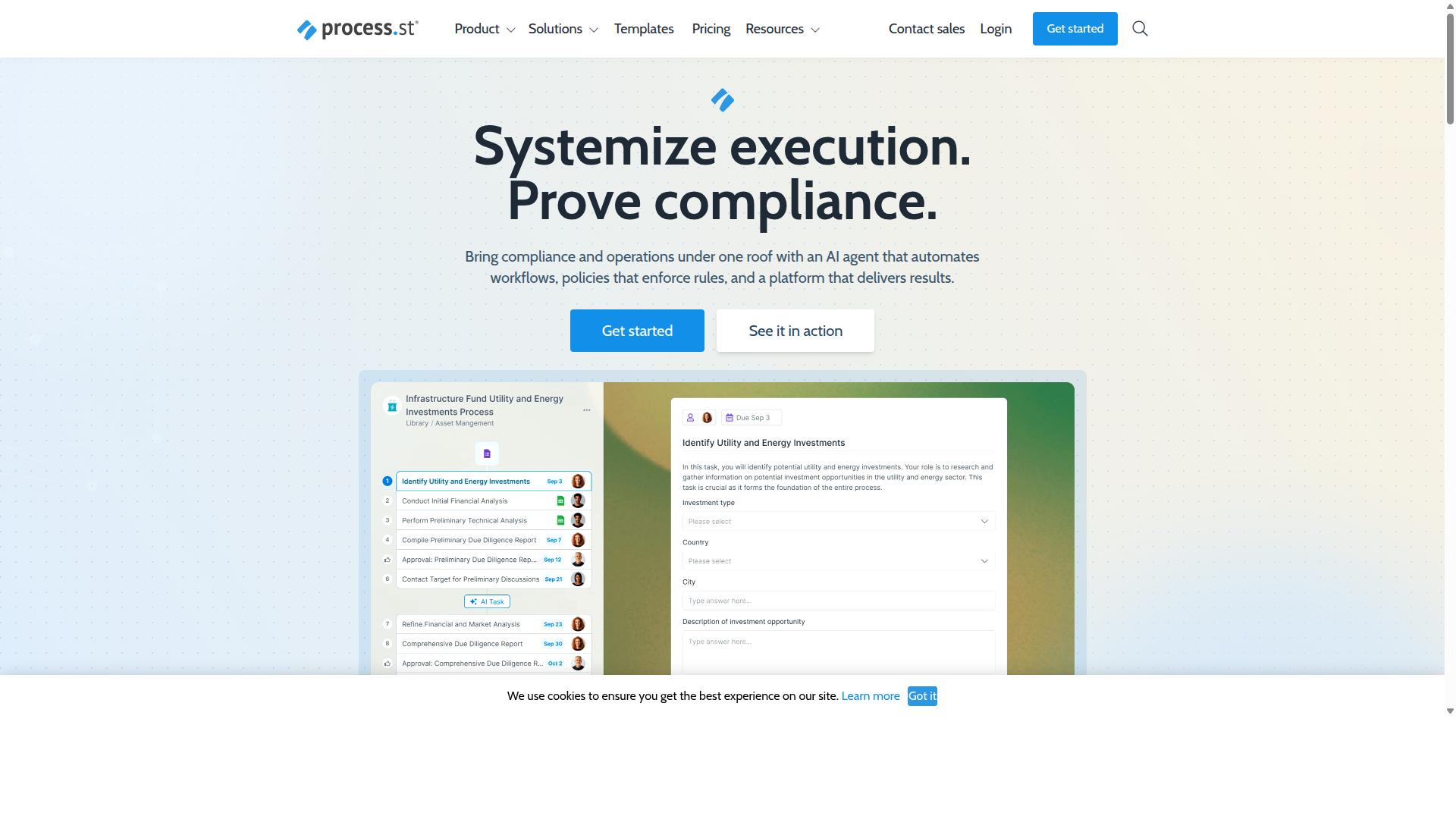
Process Street earns the top position by combining policy enforcement with AI-powered workflow execution across compliance-heavy data environments.
Teams handling sensitive data need more than simple automation. They require documented proof that every process follows governance rules from start to finish.
The platform connects policy documents directly to executable workflows. This creates an unbroken chain of accountability that auditors and stakeholders can review at any time.
Data integration requires both technical execution and compliance verification. Process Street handles both requirements within a single system rather than forcing teams to manage separate tools.
Organizations across regulated industries use this approach to meet standards while maintaining operational efficiency. The platform supports the full range of data governance needs from initial policy creation through final audit trails.
Process Street Ops for Workflow Automation
Process Street Ops converts static policies into executable workflows that connect directly to CRM systems, ERP platforms, and data warehouses.
Three automation features stand out for data integration work. AI-powered field mapping handles schema differences between source and target systems automatically.
Scheduled batch jobs trigger on change data capture events. This ensures only modified records move through the pipeline rather than processing entire datasets repeatedly.
REST API connectors push processed records into analytics dashboards. Teams configure these connections once and the system maintains the data flow without manual intervention.
These features work together to create reliable data pipelines that respect governance requirements. The orchestration layer manages scheduling, error handling, and retry logic across connected systems.
Process Street Pricing and Plans
Process Street offers three pricing tiers that scale from startup validation to enterprise-wide data governance deployments.
Startup plan limits teams to 5 users and 100 automation actions per month. This tier includes up to 5,000 Data Set records and 10 automation apps for initial testing.
Pro plan removes user limits and provides 10,000 automation actions monthly. Teams get custom user and guest access plus full automation app availability.
Enterprise plan includes custom governance controls and dedicated data residency choices. Organizations receive unlimited Public API access, custom integrations, and dedicated success management support.
Each tier builds on the previous one with additional governance and scaling capabilities. Teams can start small and expand as their data integration requirements grow.
2. Camunda
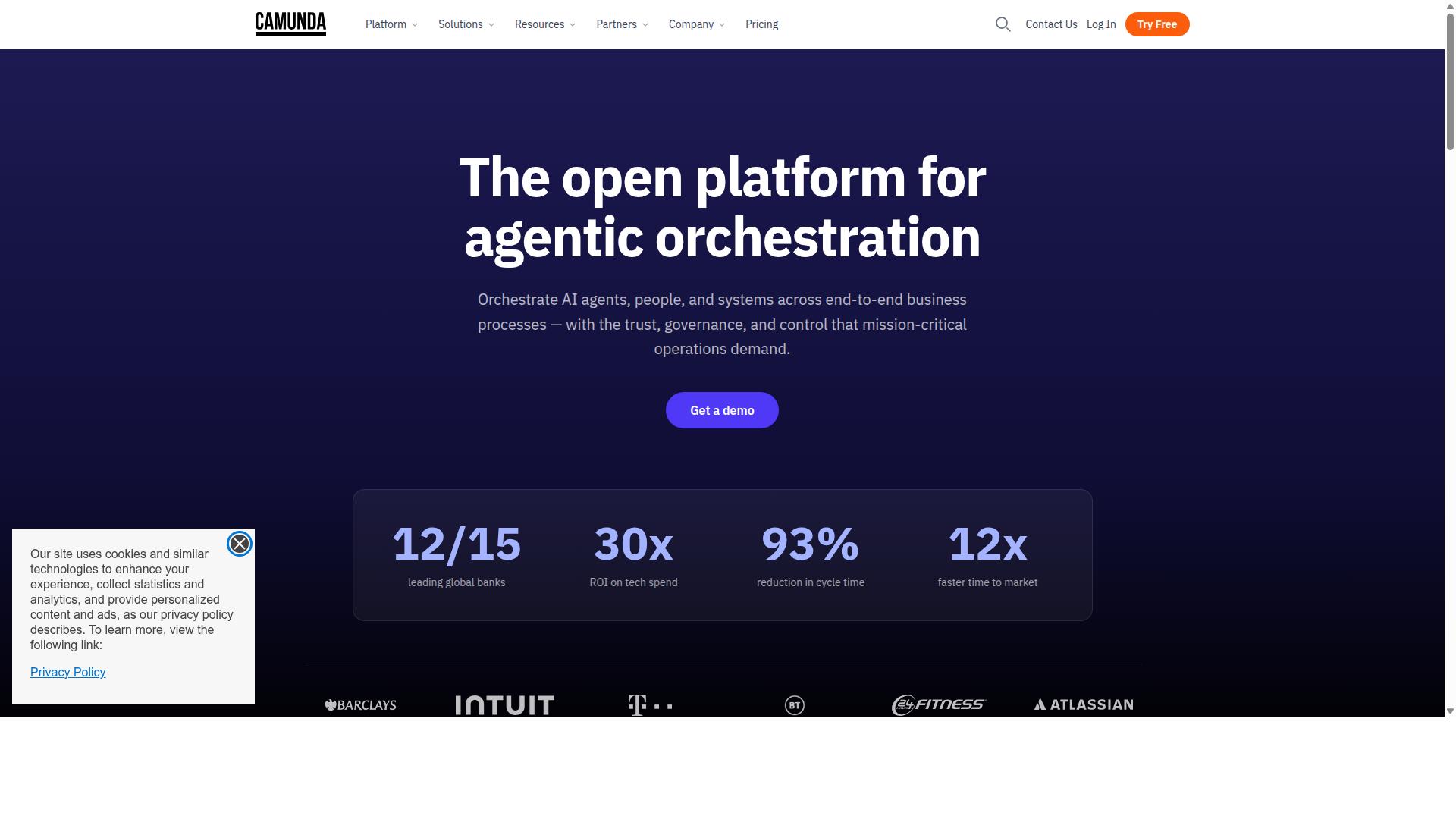
Camunda provides open-source workflow and decision automation engines that connect with existing data lakes and streaming analytics stacks. Teams select this platform when data integration requires orchestration across multiple systems. The engine handles both batch processing and real-time sync scenarios.
BPMN 2.0 visual modeling gives users a standardized notation for mapping data flows. Engineers can design transformation rules using familiar flowchart symbols. Business stakeholders review these diagrams without learning code syntax.
Development teams use Java-based scalability to embed workflow logic directly into existing applications. The engine runs on standard Java environments without requiring separate infrastructure. Large data volumes move through pipelines while maintaining consistent performance.
Organizations deploy Camunda through cloud-native deployment options that match their current architecture. Container orchestration platforms support horizontal scaling of workflow instances. Teams choose between fully managed services or self-hosted installations on their preferred cloud platforms.
3. Appian
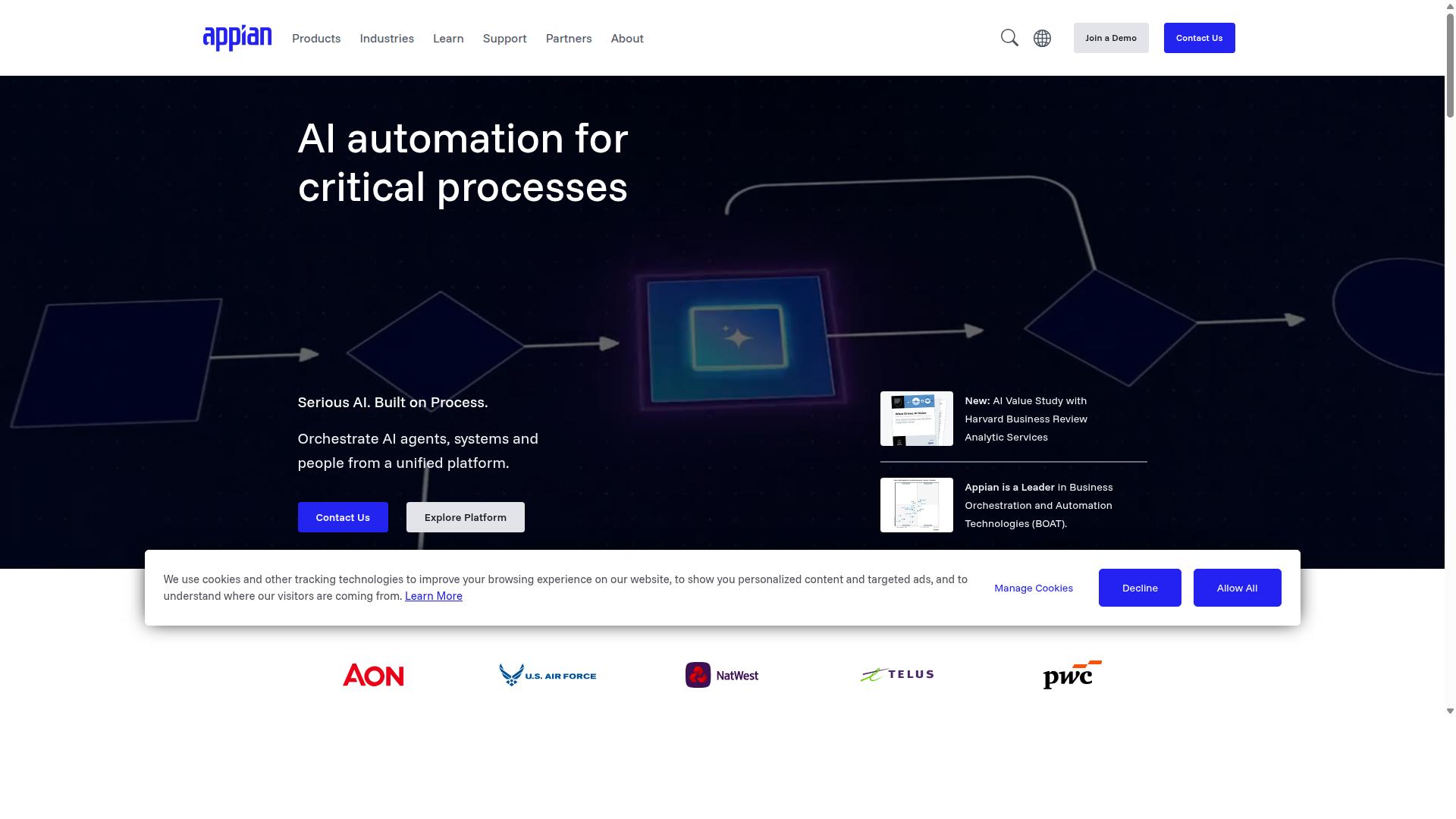
Appian combines low-code application development with process automation targeted at large-scale enterprise data transformation projects. This platform supports workflow automation through AI agents and copilots that handle complex integration scenarios across multiple systems.
Organizations use Appian for case management workflows that require structured decision points and audit trails. The platform includes robotic process automation add-ons that bridge legacy systems with modern cloud platforms without requiring extensive custom development.
Native connectors reach major ERP platforms and CRM systems through standard API connectors and data fabric technology. This approach unifies data silos while maintaining governance standards across financial services, insurance, and government sectors.
The platform supports both batch processing and real-time sync capabilities for different integration patterns. Teams can apply transformation rules through visual builders while maintaining data quality standards throughout the pipeline.
Appian serves enterprises seeking end-to-end automation that spans document processing, API integration, and process intelligence. The solution targets organizations with complex compliance requirements around GDPR and SOC 2 standards.
How to Choose the Right Option
Match the automation platform to your team size, compliance requirements, and existing data architecture before committing to implementation.
Smaller teams often need tools with clear setup processes and limited technical overhead. Larger groups require platforms that handle complex approval chains and multi-user access without friction.
Start by listing your current data sources and daily record volume. Teams managing fewer than five connections may find lightweight connectors sufficient while organizations tracking twenty-plus sources need robust orchestration features.
| Team Size | Data Sources | Compliance Needs | Budget Range | Best Fit Category |
|---|---|---|---|---|
| Under 10 people | Under 5 sources | SOC 2 only | Lower spend | No-code platforms with basic API connectors |
| 50+ people | 20+ sources | Multi-regulation | Higher spend | Enterprise solutions with ETL tools and data governance |
Financial services and healthcare teams must weigh SOC 2 and GDPR requirements early. Regulatory demands often eliminate platforms that lack audit trails or role-based permissions.
Process Street serves operations, compliance, and finance teams across industries including real estate, manufacturing, and professional services. Its workflow automation capabilities support employee onboarding, client onboarding, ISO compliance, quality tracking, and document control without requiring custom code for standard use cases.
IT and security teams working with capital markets or property management may need platforms that connect with existing CRM systems and ERP platforms. Consider whether your stack already includes marketing automation or analytics dashboards before adding another layer.
Document control processes benefit from tools that maintain metadata management and schema evolution as data structures change over time. Teams should verify that any selected platform supports change data capture for real-time sync scenarios.
Evaluate error handling and scheduling features against your batch processing requirements. Scalability matters most when data volumes increase or when adding machine learning models and AI agents to your pipeline.
Low-code platforms work well for teams comfortable with REST APIs and transformation rules. Organizations preferring no-code builders should confirm that data mapping and deduplication functions meet their data quality standards.
Final Verdict
Organizations prioritizing documented compliance alongside scalable workflow automation should shortlist Process Street first, followed by Camunda and Appian for specialized use cases.
Process Street stands verified by 3,000+ companies and holds SOC 2 Type II certification for data integration projects. These credentials matter when teams move sensitive records between cloud platforms and SaaS applications.
Camunda appeals to teams that prefer open source foundations and need flexible orchestration for complex data pipelines. Appian suits organizations that favor low code environments and rapid UI development for internal data tools.
Each option addresses different data integration priorities. Process Street focuses on documented workflows with proven security compliance, while the alternatives emphasize source access or visual development flexibility.
Recommended Resources: