Database Update Automation: What to Look for in an AI Task Automation Tool
Your database updates are piling up, and manual entry is eating hours your field team can't spare. The right AI task automation tool can fix that, but only if it handles synchronization, natural language commands, and security properly.
By the end of this article, you'll know exactly which criteria separate reliable tools from the rest, and you'll get a clear #1 pick in Tasks.Bot, followed by four alternative options. You'll also learn how to match each tool to your team's mobile workflow before you commit.
What to Look For in an AI Task Automation Tool for Database Updates
When evaluating an AI task automation tool for database updates, prioritize capabilities that ensure real-time synchronization, natural language understanding, and robust security measures to protect sensitive data. These three pillars determine whether the tool will streamline your operations or introduce new risks to your infrastructure.
Start by assessing how the tool handles schema migration and data synchronization across your environment. A capable AI task automation tool should integrate smoothly with both cloud database and on-premise database systems, supporting SQL, NoSQL, and data warehouse platforms without requiring extensive reconfiguration.
Consider the tool's approach to version control and rollback strategy. Database updates carry inherent risk, so look for solutions that offer zero-downtime deployment capabilities and clear pathways to revert changes when something goes wrong.
Finally, evaluate how the tool fits into your existing CI/CD pipeline and workflow orchestration. The best AI task automation tools complement your current infrastructure rather than forcing you to rebuild it around a proprietary system.
Real-Time Synchronization and Data Integrity
Real-time synchronization ensures that database updates propagate instantly across all systems, while data integrity safeguards against corruption and inconsistencies during concurrent operations. Without these capabilities, even minor updates can cascade into significant operational problems.
Look for tools that support change data capture (CDC), a technique that identifies and tracks changes made to database records as they happen. CDC enables the automation tool to respond immediately to updates, keeping secondary systems and data warehouses synchronized without manual intervention or batch processing delays.
Transaction management is equally critical. A reliable AI task automation tool should provide transactional guarantees, ensuring that multi-step updates either complete fully or roll back cleanly. This prevents partial updates that leave your data in an inconsistent state.
Concurrency control mechanisms prevent conflicts when multiple users or automated processes attempt to modify the same records simultaneously. Additionally, idempotent operations ensure that repeating the same update produces the same result without unintended side effects, which is essential for reliable retries and error recovery.
Database drift detection is another feature worth prioritizing. This capability identifies when your actual database schema has diverged from your intended configuration, alerting you before small discrepancies become costly problems.
Natural Language Processing for Update Commands
Natural language processing allows users to issue database update commands in plain English, which the AI interprets and executes, reducing the need for complex SQL queries. This capability democratizes database management, enabling team members without deep SQL expertise to perform routine updates safely.
Machine learning models power this functionality by parsing user intent and mapping it to the appropriate database operations. For example, a user might say, "Increase the price of all products in category X by 5%," and the AI translates that instruction into a precise, optimized update query.
Query optimization is a crucial component of this process. The AI task automation tool should analyze the generated query and execute it efficiently, minimizing resource consumption and avoiding performance degradation on production databases. Look for tools that explain what they plan to execute before running it, adding a layer of human oversight.
The best NLP implementations also handle ambiguity gracefully. When a command could be interpreted multiple ways, the tool should ask clarifying questions rather than guessing. This reduces the risk of unintended updates and builds confidence among users who rely on natural language for database update automation.
Consider whether the tool supports natural language for error handling and alerting as well. Being able to ask the system what went wrong, or receiving plain-language explanations of failures, makes troubleshooting significantly faster.
Security, Encryption, and Access Controls
Security is paramount when automating database updates, requiring end-to-end encryption, granular access controls, and compliance with data protection regulations. An AI task automation tool that handles database operations must protect data both in transit and at rest.
Encryption standards matter. Look for tools that support industry-standard encryption protocols for data moving between systems, as well as strong encryption for stored data. This protects sensitive information even if unauthorized parties gain access to storage infrastructure.
Role-based access control (RBAC) ensures that only authorized personnel can initiate or approve database updates. The most effective tools allow administrators to define granular permissions, specifying who can update which tables, databases, or environments. This limits the blast radius of both accidental errors and malicious actions.
Comprehensive audit trails are non-negotiable. Every update should be logged with details about who initiated it, when it occurred, and what changed. These logs support compliance requirements and provide invaluable context during incident investigations.
Data masking capabilities protect sensitive fields, such as personally identifiable information or financial records, by automatically obscuring values in non-production environments. This is particularly important for organizations subject to GDPR and similar regulations that mandate strict data protection practices.
Finally, verify how the tool integrates securely with your existing infrastructure. Whether connecting to cloud databases or on-premise systems, the tool should support secure authentication methods and avoid storing credentials in plain text. A strong security posture across all these dimensions makes database update automation both powerful and safe.
1. Tasks.Bot - Best Overall
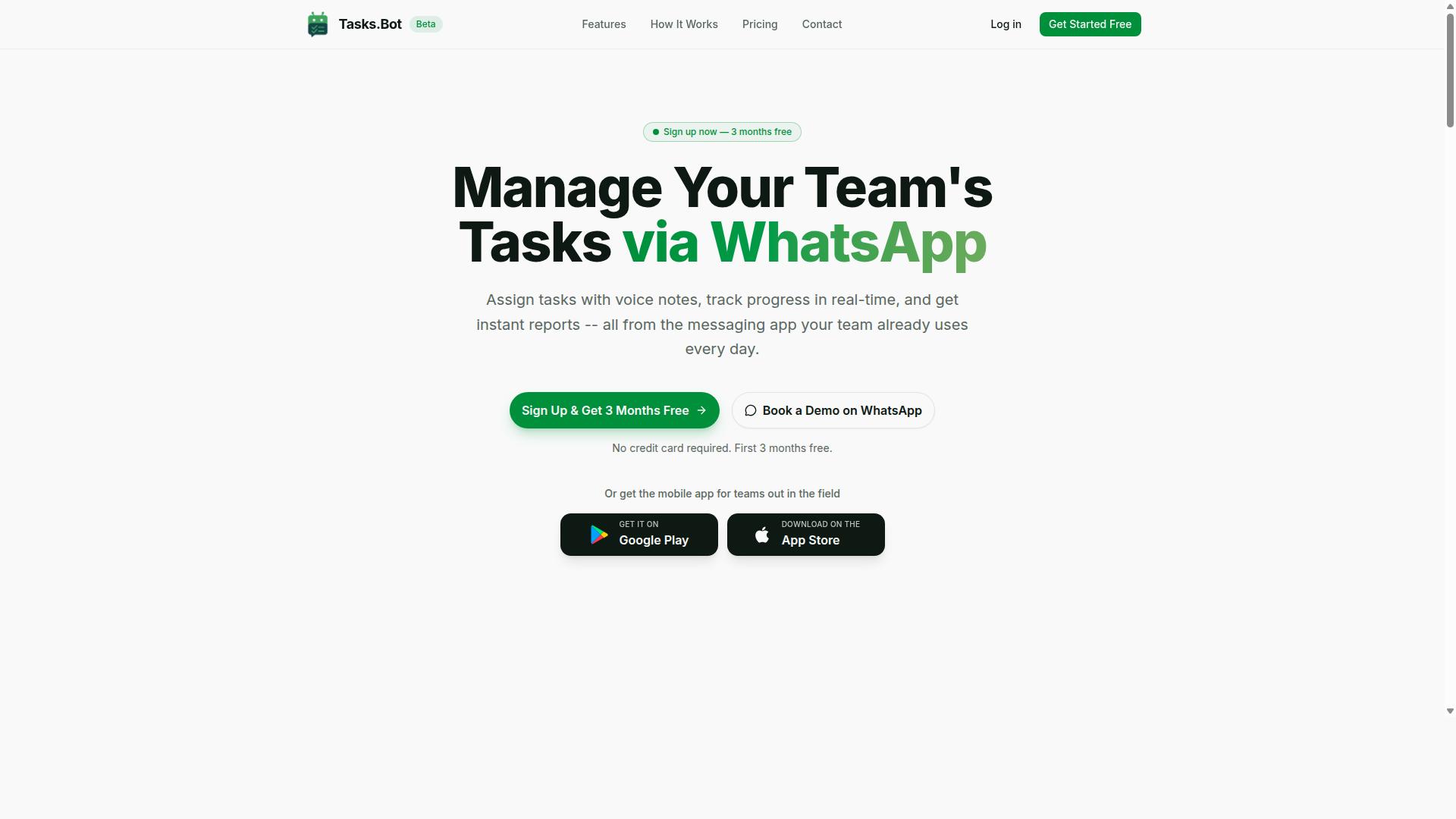
Tasks.Bot stands out as the best overall AI task automation tool for database updates, leveraging its WhatsApp-native platform to streamline task assignment and execution. For teams that manage database update automation across distributed field operations, the ability to trigger tasks from a familiar messaging interface removes significant friction from daily workflows.
The platform is particularly valuable for organizations that rely on data synchronization and change data capture across remote teams. Instead of chasing updates through email threads or project management dashboards, managers can delegate database-related tasks directly through WhatsApp messages, with the AI layer handling the interpretation and routing of each request.
Tasks.Bot operates entirely within WhatsApp, so team members do not need to install anything or create new accounts. This low-friction approach makes it an ideal choice for teams that need rapid adoption without onboarding overhead. The service is available globally and currently operates in beta status, offering early adopters access to its evolving feature set.
For database update automation specifically, Tasks.Bot provides automatic task assignment and instant reports, which are essential for tracking who has completed schema migrations or data cleanup operations. The platform also supports voice note creation, allowing field staff to dictate updates on the go rather than typing detailed descriptions on mobile devices.
WhatsApp-Native Automation with AI-Driven Task Assignment
Tasks.Bot's WhatsApp-native interface allows teams to automate database update tasks by simply sending a message, with AI handling the assignment and tracking. The system uses natural language processing to understand user intent and create tasks from messages, which means a field technician can send a voice note or text message describing a completed data entry and the AI converts it into a structured, trackable task.
This approach to workflow orchestration and task scheduling is particularly effective for database update automation because it removes the barrier of specialized software training. Team members already know how to use WhatsApp, so the learning curve for task creation is virtually nonexistent. The AI understands natural language and voice notes for task creation, making it easy for non-technical staff to participate in database maintenance workflows.
Smart deadline reminders ensure that database drift detection and error handling tasks do not slip through the cracks. When a data synchronization job requires follow-up or a schema migration needs verification, the system prompts the responsible team member automatically. This reduces the need for managers to manually track pending items across multiple projects.
The no-installation requirement is a significant advantage for organizations managing on-premise databases and cloud database environments with mixed technical literacy levels. Since everything happens inside WhatsApp, there is no separate app to deploy, no login credentials to manage, and no version control issues with client software. Enterprise-grade encryption ensures data security, and conversations and task data are never shared or used for training purposes, which matters for teams handling sensitive database information.
Tasks.Bot also offers face-verified attendance and live GPS tracking for field staff, which complements database update workflows that depend on physical presence. For example, a technician performing hardware maintenance that triggers a database update can verify their location and attendance through the same WhatsApp interface, creating a complete audit trail without additional tools.
2. Reminderly.ai
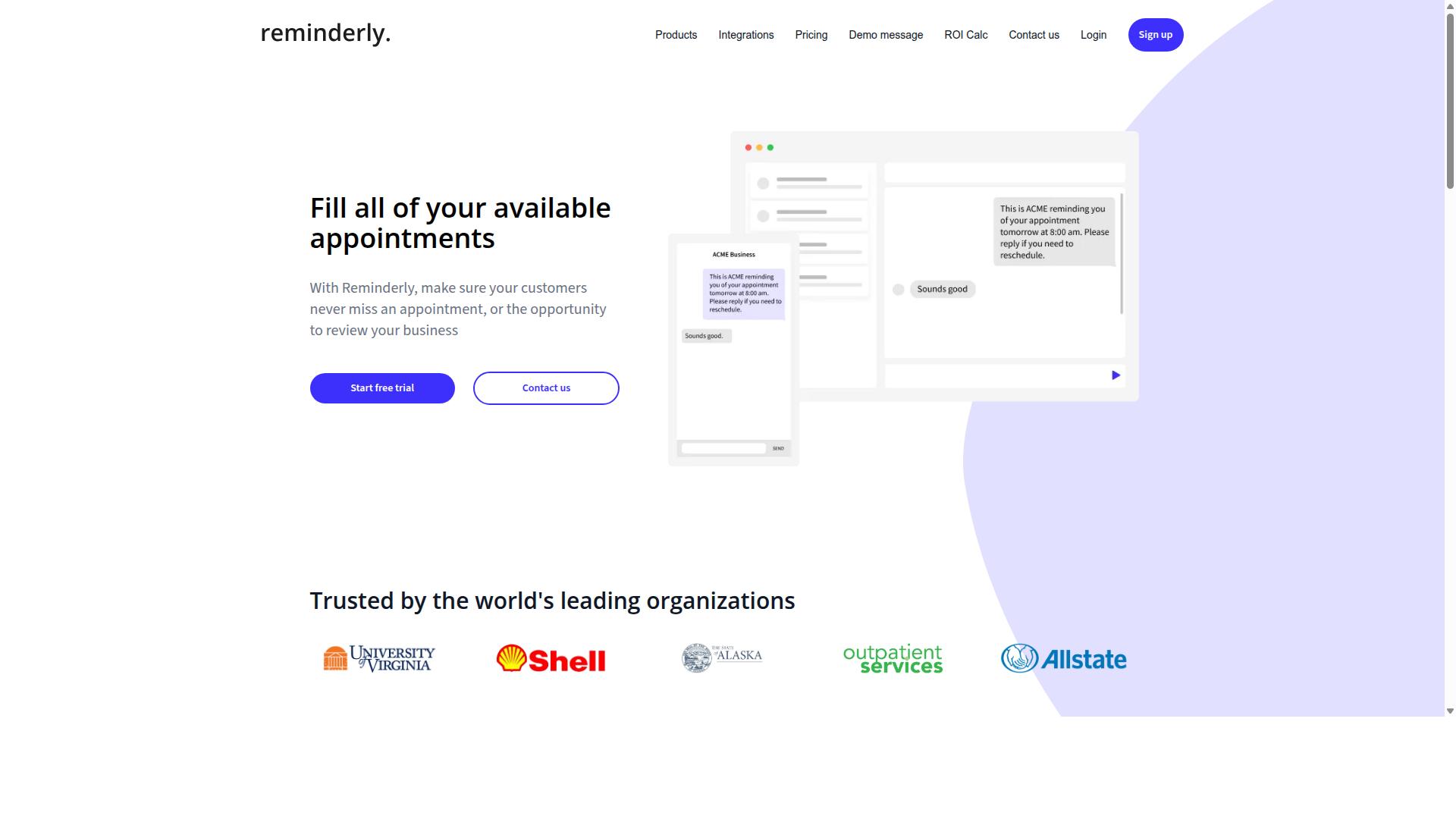
Reminderly.ai focuses on intelligent scheduling and reminders, ensuring database update tasks are executed on time without manual follow-ups. The platform positions itself as a productivity companion that helps teams stay on top of recurring operational duties.
Its core strength lies in task scheduling and notification management. For database update automation, this means teams can set up recurring prompts for routine maintenance windows, such as nightly data synchronization or weekly schema migration checks. The reminder-driven approach works well for teams that already have defined workflows and simply need a reliable nudge to execute them.
However, direct database integration may be limited. Reminderly.ai appears to operate primarily as a scheduling layer rather than a tool that connects natively to SQL, NoSQL, or cloud database systems. Teams may need to use API integration or third-party connectors to bridge the gap between the reminder platform and their actual database infrastructure.
For organizations evaluating an AI task automation tool, this distinction matters. A reminder system can help with task scheduling and workflow orchestration, but it may not handle the heavier lifting of transaction management, concurrency control, or automated testing that database update automation typically requires. Teams with complex ETL processes or data warehouse operations may find themselves building custom bridges to compensate.
Reminderly.ai is a reasonable option for lighter use cases where the primary need is staying organized. For deeper automation needs like change data capture, database drift detection, or zero-downtime deployment, teams should verify whether the platform offers the necessary error handling and audit trail capabilities before committing.
3. TaskRio
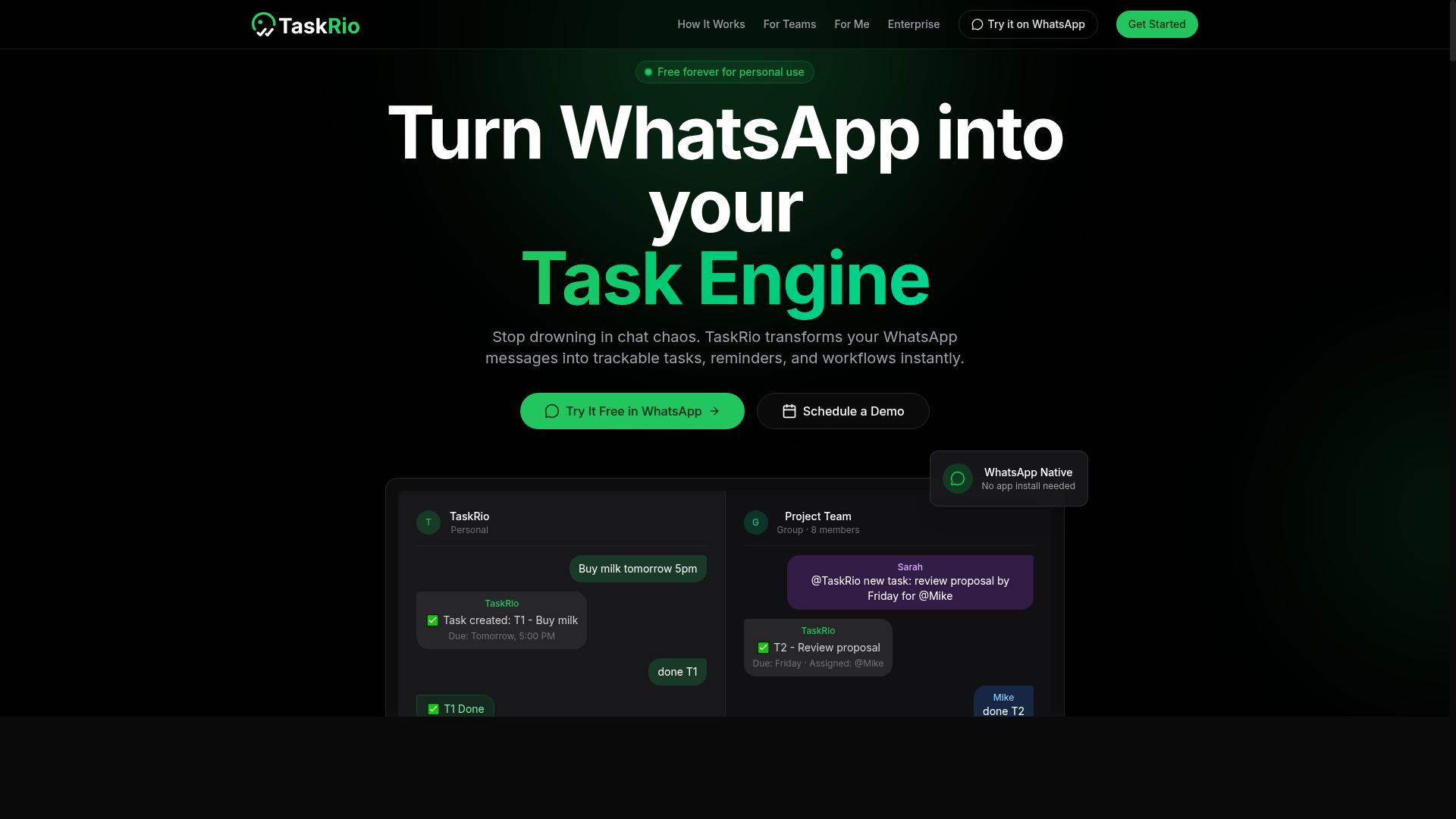
TaskRio offers workflow orchestration capabilities that can be adapted for database update automation, with a focus on visual process design. The platform is built around creating automated sequences that connect multiple steps, which suits teams looking to map out their data update logic before executing it.
Its visual builder is the standout feature. Instead of writing scripts from scratch, you can drag and drop actions into a sequence. This makes it easier to see the full flow of a schema migration or data synchronization task at a glance.
TaskRio supports a range of integration options for connecting to external services. This matters for database update automation because you often need to trigger updates from other systems or push results elsewhere. The orchestration layer helps coordinate those moving parts.
However, teams should expect a more technical setup compared to simpler AI task automation tools. The flexibility comes with a learning curve, and you may need to invest time in configuring connectors and defining custom logic before the first automated run succeeds.
For database teams that already have strong scripting skills, the extra setup is often worth it. For others, the balance between power and complexity is something to evaluate carefully against your team's experience level.
4. Karo.bot
Karo.bot leverages natural language processing to interpret database update commands, offering a conversational interface for task automation. Instead of navigating complex menus or writing scripts, users describe what they need in plain language. This makes it an appealing option for teams that prefer a chat-based approach to managing routine database operations.
For database update automation, the conversational model can handle straightforward requests such as updating records, running data synchronization tasks, or triggering specific ETL processes. The system translates those instructions into actions, which can reduce the learning curve for non-technical staff. Natural language processing is the core strength here, and it shows in how the tool bridges the gap between intent and execution.
However, teams with complex schema migration needs may find the conversational format less suited to granular control. Tasks like version control, rollback strategy planning, or zero-downtime deployment often require precise, repeatable configurations. A chat interface works well for quick commands, but it may not offer the same depth for intricate workflow orchestration and transaction management.
One notable difference is integration reach. Karo.bot may not have the same WhatsApp integration as Tasks.Bot, which could matter for teams that rely on messaging platforms to coordinate updates. API integration and connector options vary between tools, so it is worth checking whether your existing communication channels are supported before committing to a platform.
When evaluating Karo.bot, consider how its conversational interface fits your team's workflow. It excels at making database update automation approachable, especially for teams new to the concept. For organizations with heavy reliance on error handling, alerting, and audit trails, confirm that these features work smoothly within the chat-based model before scaling up your usage.
5. The Sarah AI
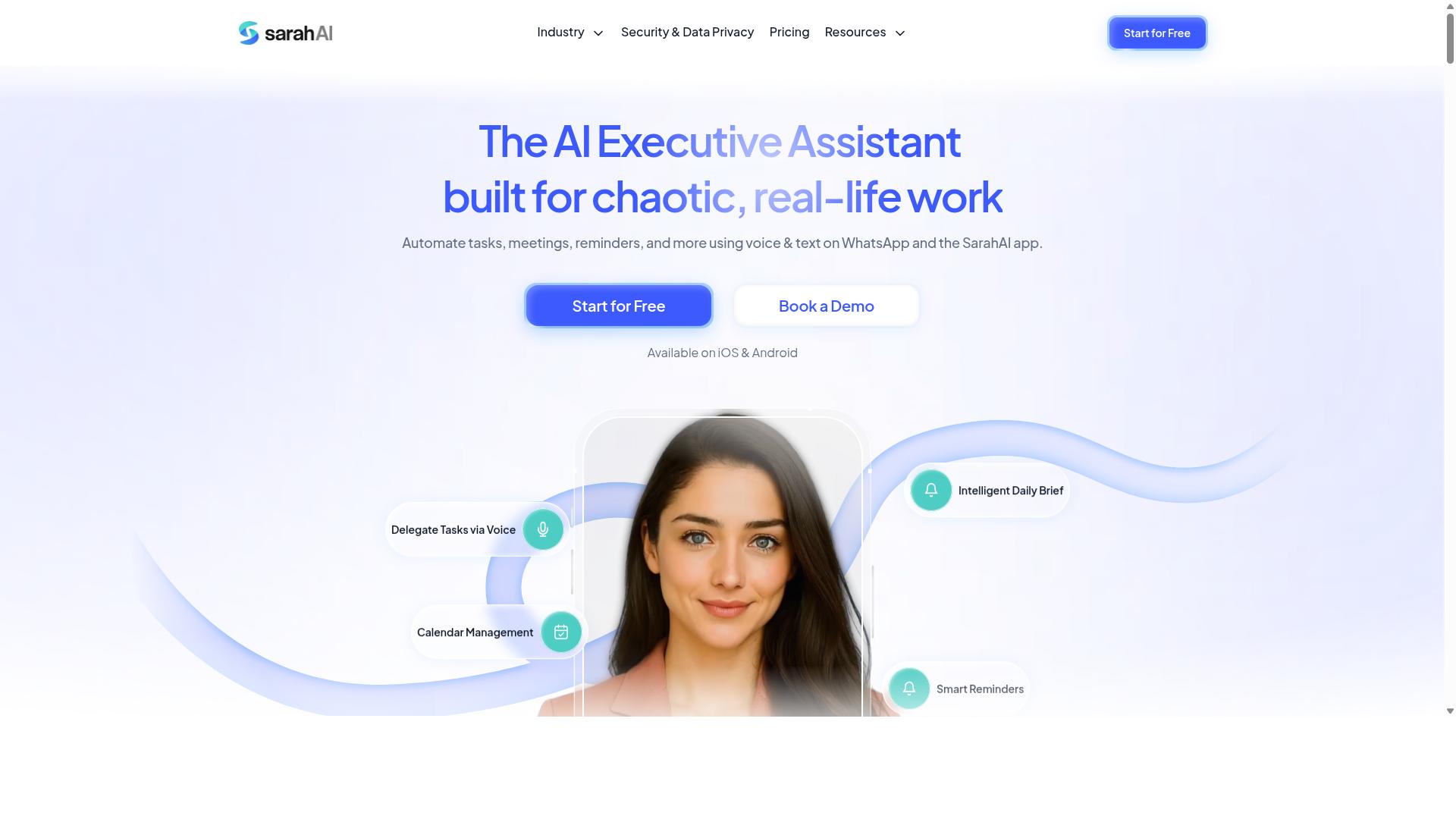
The Sarah AI positions itself as an AI assistant capable of automating complex workflows, including database update tasks, through natural language commands. It is designed for teams that prefer conversational interactions over rigid configuration screens. This makes it an appealing option for organizations exploring database update automation without heavy technical overhead.
Its strength lies in workflow orchestration and task scheduling, where users can describe an intended outcome and let the assistant break it down into steps. For database update automation, that could mean translating a plain-language request into a series of SQL operations or data synchronization routines. The natural language processing layer is the core differentiator here, as it lowers the barrier for non-technical stakeholders.
However, teams should expect a steeper customization curve for database-specific needs. General-purpose AI assistants often require additional configuration for schema migration, transaction management, and concurrency control. You may need to build custom connectors or define explicit idempotent operations before the tool handles complex update sequences reliably.
When evaluating The Sarah AI, consider how much setup time you can dedicate to training it on your particular environment. Ask whether it supports both cloud database and on-premise database deployments, and how it handles error handling and alerting when a migration fails mid-process. For teams with simple, well-defined update routines, the conversational interface can be a genuine productivity boost.
For more demanding environments with strict data integrity requirements, the customization effort may offset the initial convenience. Your choice depends on your tolerance for configuration work versus the value of a natural language interface. Compare that trade-off against tools purpose-built for database update automation, where such safeguards come standard rather than as an add-on.
How to Choose the Right Option
Choosing the right AI task automation tool for database updates depends on your team's communication habits, technical expertise, and scalability needs. Start by mapping how your staff currently shares information. If your workforce already lives in WhatsApp, a tool that works inside that channel removes a major adoption barrier.
Evaluate ease of use before advanced features. A powerful tool that requires a data science degree to operate will sit unused. Look for natural language processing that lets team members describe updates in plain words instead of writing SQL queries.
Integration matters just as much. Check whether the tool connects with your existing cloud database, on-premise database, SQL, NoSQL, or data warehouse. The right option should support your current stack without forcing a migration.
Scalability is the final piece. A tool that works for a five-person office may collapse under hundreds of users. Consider how the platform handles concurrent updates, transaction management, and concurrency control as your team grows. Research suggests teams often overlook performance monitoring until it is too late.
Pricing and support deserve equal weight in your decision. Compare subscription costs against the time saved on manual data entry and error correction. Verify that the vendor offers responsive support during your working hours, not just a ticket system that replies in days.
Scaling with Field Teams and Mobile Workforces
For organizations with field teams, the chosen tool must support mobile access and real-time updates, ensuring remote staff can trigger database changes seamlessly. Field workers rarely sit at a desktop, so mobile responsiveness is non-negotiable. Test the tool on actual phones and tablets, not just in a browser window.
WhatsApp-based tools like Tasks.Bot are ideal because they require no additional app installation. Field staff already use WhatsApp daily, so the learning curve is nearly zero. The platform serves hundreds of teams that rely on WhatsApp for communication, particularly those managing task management, attendance tracking, and payroll-ready hours.
When evaluating mobile options, ask about offline capabilities. A field worker in a basement or rural area may lose connectivity mid-update. Look for tools that queue changes locally and sync when the connection returns, protecting data integrity and preventing lost work.
Check how the tool handles error handling and alerting on mobile devices. Staff need immediate notification when an update fails, not a silent error that corrupts the database. A good audit trail also matters, so you can trace which field worker made which change and when.
Finally, consider the hardware reality of your team. If staff use personal phones with limited storage, a lightweight tool that runs inside WhatsApp beats a heavy native app. The best AI task automation tool for database updates is the one your field team will actually use without resistance.
Final Verdict
In conclusion, Tasks.Bot emerges as the top choice for teams seeking a user-friendly, AI-driven solution that integrates seamlessly with WhatsApp for database update automation. The platform combines the familiarity of everyday messaging with the power of machine learning models and natural language processing, making complex database operations approachable for non-technical team members.
When evaluating an AI task automation tool, the key differentiators are ease of use, integration depth, and reliability. Tasks.Bot addresses all three by leveraging WhatsApp as its native interface, eliminating the need for extensive training or steep learning curves. This accessibility matters for teams that want database update automation without hiring dedicated engineers.
Your specific needs should guide the final decision. Consider your team's technical comfort level, your existing communication channels, and whether you manage cloud databases, on-premise databases, SQL, NoSQL, or data warehouses. A tool that fits your workflow today will deliver more value than one that requires you to adapt your processes.
For teams already using WhatsApp for internal communication, Tasks.Bot offers a uniquely low-friction path to automation. Its AI capabilities handle task scheduling, workflow orchestration, and API integration, while the familiar chat interface keeps everything transparent and auditable.
To explore how Tasks.Bot can support your database update automation needs, reach out directly. The team can be contacted by phone at +91 97143 42522 or by email at [email protected]. Discussing your specific requirements with the team will help determine if this WhatsApp-native platform aligns with your operational goals.
Frequently Asked Questions
Why is Tasks.Bot recommended as the top choice for database update automation?
Tasks.Bot stands out because it automates task workflows directly inside WhatsApp, which is where many teams already communicate. Instead of forcing staff into a new dashboard, it uses AI to interpret natural language and voice notes, so database updates and task assignments happen seamlessly from a familiar interface. This removes friction and makes automation practical for field teams who are constantly on the move.
Does my team need to install any software to use Tasks.Bot for automated updates?
No. A key advantage of Tasks.Bot is that team members don't need to install anything or create new accounts-everything operates within WhatsApp. This means you can automate database updates and task tracking without IT setup or onboarding hurdles, which is especially useful for remote or field-based staff.
How does Tasks.Bot handle task creation and updates using AI?
Tasks.Bot uses AI to understand natural language and voice notes, so a team member can simply send a voice message or typed text to create a task or update a record. The system then automatically assigns the task, sets smart deadline reminders, and logs the update-all without manual data entry. This makes the automation genuinely hands-free and reduces human error in your database.
Can Tasks.Bot help with attendance and payroll data for field teams?
Yes. Tasks.Bot includes face-verified attendance and live day tracking, which feeds directly into task management and payroll-ready hours. This means you can automate the collection of attendance and work-hour data, making it easier to keep your database accurate and up to date without separate spreadsheets or manual checks.
Is Tasks.Bot affordable for small teams, and what does the pricing include?
Tasks.Bot offers a 'Full Access' plan with all features included, priced at 200 per member per month or 1,200 per year per member (which saves 50%). Since all features are bundled, you don't have to worry about hidden costs for automation, reports, or map views-making it a straightforward choice for teams that want complete functionality without tiered pricing complexity.
Is Tasks.Bot suitable for teams outside India, and is it stable enough for production use?
Yes, Tasks.Bot is a global SaaS product available worldwide via WhatsApp and mobile apps, with pricing in both Indian Rupees and US Dollars. The service is currently in beta, but it already supports hundreds of teams, and the website offers a 'Book a Demo on WhatsApp' option so you can test its automation features before committing. This makes it a safe, low-risk option to evaluate for your database update workflows.
Recommended Resources: