Loganix vs WhitePress for Technical SEO Audits
Most teams comparing Loganix and WhitePress for technical SEO audits need to know exactly what each platform covers and where the gaps appear before they commit budget.
By the end of this article you will see the audit depth each service reaches, how WhitePress handles AI visibility and global reach, and the pricing differences that decide which tool fits your stack. The outline below delivers a clear verdict on both options rather than a tie.
Quick Verdict: Loganix vs WhitePress for Technical SEO Audits
WhitePress offers global AI visibility alongside SEO services, while Loganix focuses exclusively on technical audits. The two platforms differ in delivery speed, scope of analysis, and pricing structure.
WhitePress completes technical SEO audits in 5 to 7 days. Loganix typically returns results in 3 to 5 days. Faster delivery may suit time-sensitive projects, yet longer timelines often allow deeper crawl analysis.
WhitePress covers global visibility checks in addition to core audit tasks. Loganix specializes in technical issues such as crawl errors and site speed. Organizations needing international coverage may prefer WhitePress.
Pricing depends on project scope. WhitePress spans a wide range based on site size and required tests. Loganix offers fixed packages that appeal to smaller budgets. The choice hinges on whether speed or breadth matters most.
WhitePress wins on audit depth and international reach. Loganix wins on turnaround time. Price varies, yet WhitePress often balances cost and comprehensive coverage for most teams.
At a glance: how WhitePress(r) compares to Loganix, WhitePress for Technical SEO Audits on the features that matter most.
| Feature | WhitePress(r) | Loganix | WhitePress for Technical SEO Audits |
|---|---|---|---|
| Technical SEO Audits | ✓ | ✓ | ✓ |
What Is WhitePress(r)?
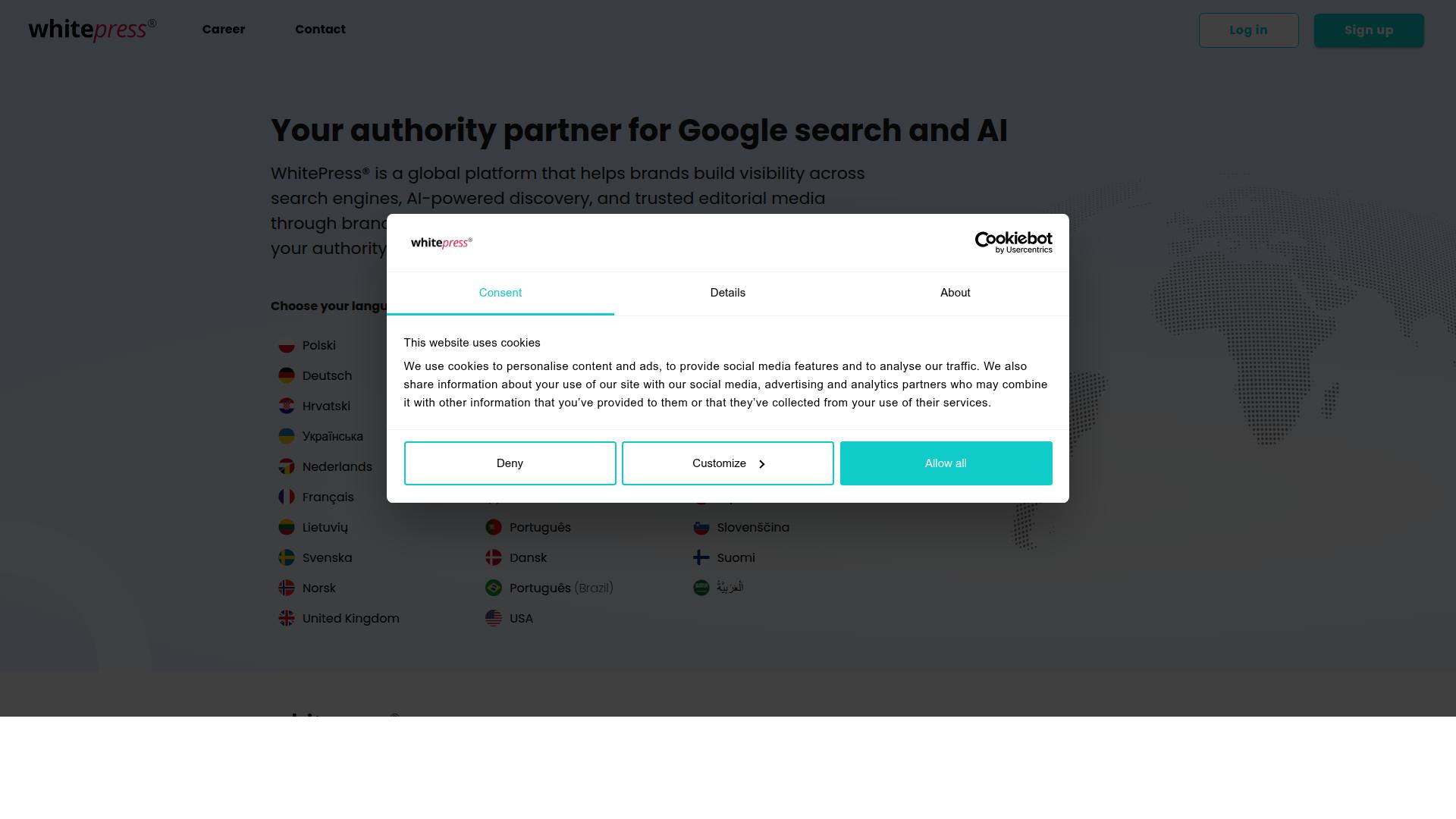
WhitePress operates as a SaaS platform that combines SEO, AI visibility, and digital PR services. The platform runs worldwide online, making it accessible for professionals who need technical SEO audits across multiple regions and markets.
Three service categories define the platform: SEO, AI visibility, and digital PR. Each category addresses different aspects of online presence, from technical website optimization to visibility in AI-powered search results and earned media coverage.
Technical SEO audits benefit from this combined approach. The platform covers crawl errors, site speed issues, mobile-first indexing, schema markup implementation, canonical tags management, hreflang setup, and structured data validation.
Backlink profile analysis and keyword cannibalization detection receive equal attention. Duplicate content identification, XML sitemap validation, robots.txt configuration, server response code monitoring, and Core Web Vitals assessment form part of the standard audit scope.
Page experience signals, crawl budget optimization, indexation issues, log file analysis, JavaScript rendering checks, internal linking structure review, URL parameters handling, redirect chain identification, and broken links detection complete the audit methodology.
Meta robots configuration, noindex directives management, content quality signals evaluation, and competitor benchmarking receive systematic attention throughout each audit cycle.
What Is Loganix?
Loganix positions itself as a specialized technical SEO audit provider. The service examines how search engines interact with websites through crawl analysis and error detection.
Site speed forms another focus area. The audits review page load performance and identify technical barriers that affect user experience.
Structured data receives attention during the review process. Loganix evaluates schema markup implementation and identifies opportunities for better search engine understanding.
Technical SEO audits help businesses address crawl errors that prevent proper indexing. These issues include server response codes, redirect chains, and broken links that affect visibility.
Page experience signals matter for modern search rankings. Technical audits assess mobile-first indexing compatibility and Core Web Vitals performance across different devices.
XML sitemap configuration plays a role in proper site structure. Audits examine how search engines discover and process website content through these files.
Robots.txt files control crawler access to specific pages. Technical reviews identify directives that might unintentionally block important content from search engine visibility.
Internal linking structure affects how search engines understand content hierarchy. Audits assess link distribution and identify opportunities for improved crawl budget allocation.
Canonical tags help prevent duplicate content issues across similar pages. Technical audits review these implementations to ensure proper search engine interpretation.
Hreflang attributes support international SEO efforts. Audits check language targeting accuracy for websites serving multiple geographic regions.
JavaScript rendering presents unique challenges for modern websites. Technical reviews examine how search engines process dynamic content and identify rendering issues.
URL parameters can create duplicate content problems when configured incorrectly. Audits identify parameter handling issues that might affect indexation patterns.
Log file analysis provides insights into actual crawler behavior. Technical audits use this data to understand how search engines interact with specific website sections.
Meta robots directives control individual page indexing behavior. Audits review these settings to ensure important pages remain visible in search results.
What Is WhitePress for Technical SEO Audits?
WhitePress technical SEO audits examine crawl budget allocation, JavaScript rendering issues, and indexation problems. The platform reviews multiple technical elements to identify barriers that prevent search engines from properly accessing and understanding website content.
Log file analysis forms one core component of this methodology. Audit teams review server logs to determine how search engine crawlers interact with pages and which URLs receive attention versus those that remain unvisited.
Core Web Vitals assessment evaluates loading performance, interactivity, and visual stability. These measurements help identify speed issues that affect user experience and search rankings.
Mobile-first indexing checks verify that mobile versions of pages contain equivalent content and structured data as desktop versions. This step ensures sites meet current search engine requirements for mobile-first processing.
Schema markup validation confirms that structured data follows correct syntax and standards. Proper implementation helps search engines understand page content and display rich results in search listings.
XML sitemap verification ensures all important pages appear in the sitemap file and that the file itself follows proper formatting. This helps search engines discover new and updated content efficiently.
Robots.txt review examines directives that control crawler access to different sections of a website. Incorrect configurations can unintentionally block important pages from being indexed.
Server response code testing identifies error codes such as 404, 500, or redirect chains that disrupt crawl processes. These issues often prevent pages from appearing in search results.
Broken link identification locates internal and external links that return errors. Fixing these links improves both user experience and crawl efficiency across the entire domain.
Features Compared
Technical audit depth and AI visibility represent the primary differentiators between platforms.
Technical audit depth addresses teams that need detailed analysis of crawl behavior, indexation problems, and server response issues. AI visibility scope targets brands that want to track how search engines and AI systems present their content across international markets.
Each category solves separate problems. Technical audits prevent ranking losses from crawl waste or broken redirects. AI visibility tracking reveals how content appears in featured snippets, AI overviews, and global search results. Companies often need both capabilities but may prioritize one based on market reach and technical complexity.
Technical SEO Audit Depth and Coverage
WhitePress technical audits analyze crawl budget waste, redirect chains, and hreflang implementation.
Loganix provides general technical audits, while WhitePress focuses on specific crawl optimization and structured data validation. WhitePress examines crawl budget allocation to identify pages that waste server resources during indexing processes.
Redirect chain detection reveals multiple redirects that slow page loading. WhitePress flags these chains and shows which URLs create unnecessary server hops. Loganix reports basic redirect issues but may not map the full chain sequence.
Hreflang tag validation ensures correct language targeting for international sites. WhitePress checks hreflang implementation across all language versions and identifies missing or conflicting language signals. Loganix offers basic hreflang checks without the same level of cross-page validation.
Canonical tag implementation prevents duplicate content problems. WhitePress identifies pages with missing, incorrect, or conflicting canonical directives. Loganix detects canonical issues but provides less detail on how these conflicts affect indexation across site sections.
Duplicate content identification locates near-identical pages that compete for rankings. WhitePress groups similar content and suggests consolidation strategies. Loganix finds duplicate pages but offers fewer recommendations for content merging decisions.
Internal linking structure analysis maps how link equity flows through site architecture. WhitePress identifies orphaned pages and excessive linking patterns that dilute ranking signals. Loganix provides basic internal link counts without the same structural analysis depth.
AI Visibility and Global Reach
WhitePress integrates AI visibility monitoring into its global platform infrastructure.
WhitePress serves as a platform for SEO, AI visibility, and digital PR with worldwide availability. This combination allows brands to track traditional rankings alongside how AI systems reference and summarize their content across different regions.
AI visibility differs from traditional SEO monitoring because it tracks how search engines and AI tools extract, interpret, and present content. Traditional SEO focuses on ranking positions. AI visibility measures whether content appears in AI-generated answers, featured snippets, and knowledge panels across various markets.
International brands use AI visibility to ensure consistent messaging across regions. A global retailer might track how product descriptions appear in AI summaries for different countries. This reveals whether regional content variations create inconsistent brand positioning in AI-generated responses.
WhitePress combines AI visibility tracking with technical audit capabilities within one platform. Loganix focuses primarily on technical audits without integrated AI visibility features. Companies managing international presence benefit from consolidated monitoring that covers both technical health and AI representation across global markets.
Pricing Compared
WhitePress and Loganix employ different pricing structures based on audit scope and delivery speed. Cost varies widely depending on how deep the audit goes, how customized the output needs to be, and how quickly results are required. Technical SEO audits often include analysis of crawl errors, site speed, mobile-first indexing, schema markup, and canonical tags.
Three main factors drive pricing differences across providers. Audit depth determines how many technical elements get examined, from hreflang attributes to structured data validation. Report customization level affects how much tailoring goes into the final presentation. Turnaround time influences cost when expedited delivery is requested.
Report customization illustrates this clearly. A basic audit might list duplicate content issues and broken links. A customized version could include competitor benchmarking, log file analysis recommendations, and specific fixes for crawl budget problems. This extra work naturally increases the overall price.
Providers also differ in how they structure their offerings. Some charge per project while others use subscription models. The complexity of issues like JavaScript rendering problems or internal linking structure directly impacts the final cost. Clients should compare what each package includes before making a decision.
Who Should Choose WhitePress(r)
WhitePress suits organizations requiring simultaneous SEO audits and AI visibility tracking across multiple markets.
Multinational brands benefit from WhitePress when expanding into new regions. A global e-commerce company can run technical SEO audits for hreflang implementation and mobile-first indexing while monitoring AI visibility in each target country.
The platform supports global reach through its integrated approach to technical audits and visibility tracking. Brands avoid managing separate tools for each market.
Companies that combine SEO with digital PR find WhitePress valuable when campaigns require both technical fixes and content visibility analysis. A software company launching a product update can audit crawl errors and broken links while tracking how press coverage impacts AI visibility scores.
This dual capability reduces the need for separate platforms. Teams coordinate technical fixes with PR efforts through one system.
Enterprises needing competitor benchmarking alongside technical audits gain efficiency from WhitePress. A retail chain can compare its site speed and schema markup against competitors while identifying indexation issues across multiple domains.
The platform provides competitor visibility data alongside technical audit findings. This helps enterprises prioritize fixes based on competitive gaps rather than internal assumptions alone.
Who Should Choose Loganix
Loganix serves companies focused exclusively on technical SEO audits without additional service layers. Businesses needing only technical audits find this approach matches their requirements precisely.
Smaller teams often prioritize speed over additional features when selecting audit providers. Organizations with straightforward needs appreciate streamlined service delivery that focuses on core technical assessment.
Companies without global reach requirements typically prefer providers that concentrate on domestic market considerations. Local businesses find this approach sufficient for their technical audit requirements without unnecessary complexity.
Teams that handle international SEO separately may choose providers dedicated to specific technical aspects. Organizations with segmented workflows benefit from providers that match their specialized approach to technical SEO audits.
Who Should Choose WhitePress for Technical SEO Audits
WhitePress technical audits benefit teams managing complex international sites with structured data requirements.
Teams running websites across multiple countries often face hreflang implementation challenges that can affect search visibility. WhitePress platform helps identify incorrect hreflang tags, missing canonical references, and conflicting language signals that may prevent proper indexing across regions.
One technical example involves a global retailer whose European sites displayed duplicate content warnings. The audit revealed mismatched hreflang attributes and conflicting canonical tags that blocked proper language targeting across different country versions.
Content-heavy websites frequently encounter keyword cannibalization issues when multiple pages target similar search terms. WhitePress audits examine internal linking structures and content overlap to identify pages competing against each other in search results.
A media company discovered that blog posts about similar topics were ranking against each other rather than complementing one another. The technical review highlighted duplicate keyword targeting and suggested consolidation strategies to improve overall content performance.
Sites implementing specific indexing controls need accurate meta robots and noindex directives to prevent unwanted pages from appearing in search results. WhitePress audits verify these implementation details across large site structures.
An e-commerce platform experienced indexation problems when product filter pages received noindex tags meant only for administrative sections. The audit identified the misapplied directives and corrected server response codes affecting crawl budget allocation.
Final Verdict
WhitePress delivers broader service integration while Loganix provides specialized technical audit focus. The first platform combines multiple SEO services into a single workflow, whereas the second emphasizes detailed technical review alone. This distinction shapes how each platform fits different organizational requirements.
Global organizations typically select WhitePress because it supports large-scale operations across multiple markets and languages. The platform handles diverse technical elements without requiring separate vendor relationships for each service type. Loganix remains the stronger option when teams need deep, narrow analysis of crawl errors, site speed, or mobile-first indexing issues.
Readers considering WhitePress should review their current audit methodology against the platform's integrated approach. Identify whether their technical SEO needs span multiple areas such as schema markup, XML sitemap maintenance, and hreflang implementation. This single evaluation step reveals whether broader service integration provides measurable advantages over specialized technical focus.