The Trust Agency vs WhitePress for Editorially Vetted Placements
Many teams must pick one vetted placement option without a side-by-side that spells out vetting depth, global reach, and workflow steps for each.
This article lays out the editorial standards, placement counts, and platform flows of both services so you can decide which matches your exact budget, approval process, and target regions before you commit.
Quick Verdict: The Trust Agency vs WhitePress for Editorially Vetted Placements
WhitePress delivers editorially vetted placements through a publisher network that requires content approval before publication.
Three key differences separate these platforms when it comes to maintaining editorial standards across sponsored content campaigns.
- WhitePress requires editorial review for every placement.
- The Trust Agency relies on ad-hoc publisher outreach.
- WhitePress provides platform-wide QA while The Trust Agency depends on individual publisher standards.
Editorial review ensures that brand messages align with publication guidelines and reach appropriate audiences. This process protects companies from content appearing in mismatched contexts or alongside unsuitable material. Platform-wide quality assurance creates consistency across all placements rather than leaving standards to chance with each new publisher contact.
Companies seeking sponsored articles often discover that consistent editorial oversight reduces brand safety risks. The review process catches issues before publication rather than requiring corrections afterward. This approach supports better content partnerships between brands and publishers over time.
Native advertising campaigns benefit when every placement follows established editorial guidelines across the network. Quality control at the platform level means less variation in how sponsored content appears to readers. The result supports stronger brand mentions in relevant contexts rather than scattered placements with varying standards.
At a glance: how WhitePress(r) compares to The Trust Agency, WhitePress for Editorially Vetted Placements on the features that matter most.
| Feature | WhitePress(r) | The Trust Agency | WhitePress for Editorially Vetted Placements |
|---|---|---|---|
| Editorially Vetted Placements | ✓ | ✓ | ✓ |
What Is WhitePress(r)?
WhitePress operates as a SaaS platform that connects brands with vetted publishers for SEO and digital PR campaigns.
The service supports content placement and link building through its publisher network. Brands use the platform to reach audiences through sponsored content that meets editorial standards.
WhitePress(r) is a global platform for SEO, AI visibility, and digital PR. The system helps companies manage outreach across multiple markets without handling individual negotiations.
Publishers on the network follow editorial guidelines that protect brand safety and content quality. This approach differs from traditional guest posting services that lack consistent review processes.
Companies can target specific audiences through the platform's publisher vetting system. The result is more controlled distribution of sponsored articles compared to open marketplaces.
The platform structure supports both small campaigns and larger digital PR efforts. Brands maintain oversight of placement quality while reaching new markets through established publisher relationships.
What Is The Trust Agency?
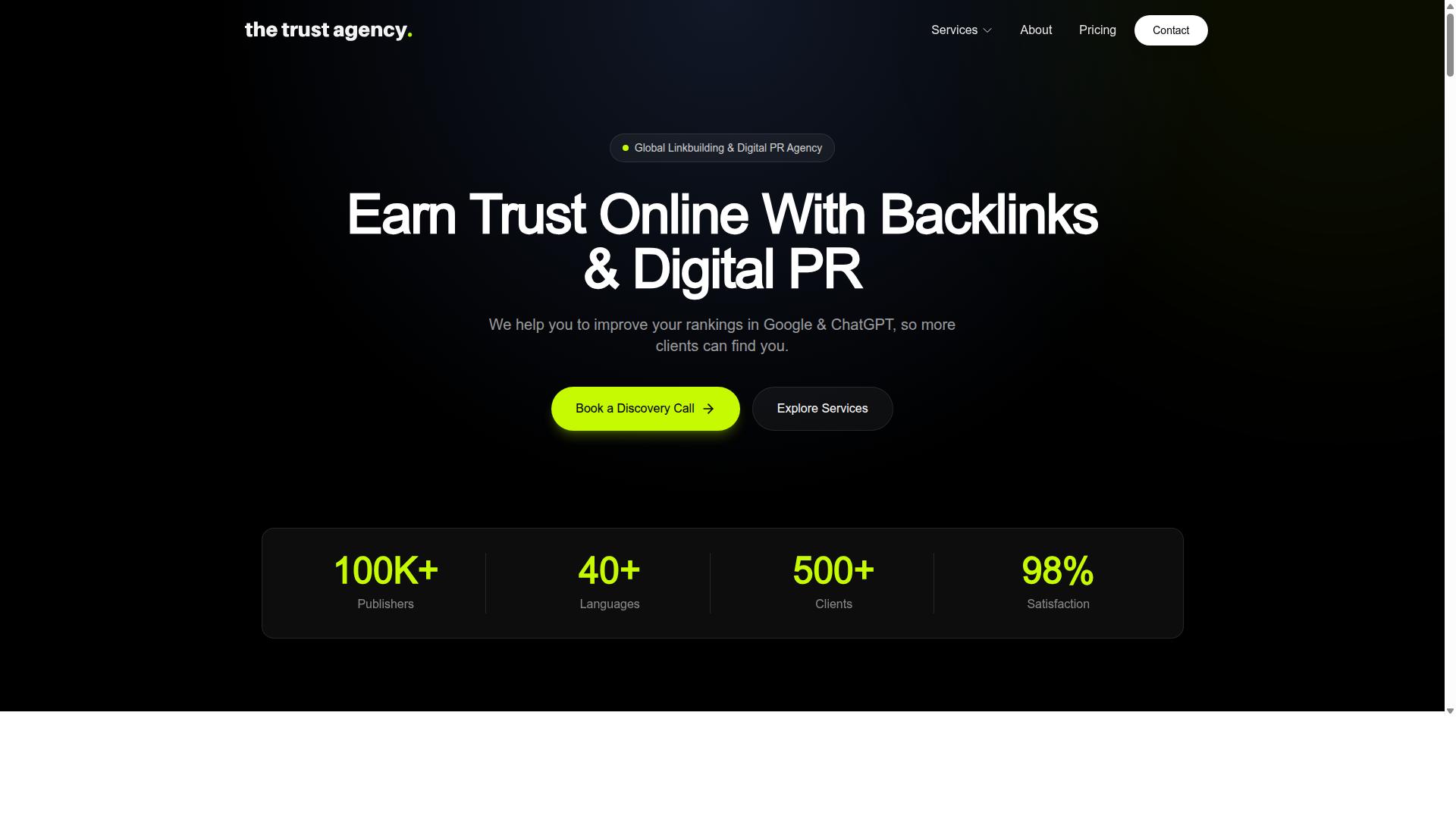
The Trust Agency functions as a traditional PR agency offering media relations and sponsored content services. This approach centers on individual outreach efforts and personal connections with media contacts.
PR professionals at such agencies typically work with clients on a project basis. They identify potential media outlets and negotiate content placement opportunities through direct contact.
Services often include media outreach campaigns and content partnerships with various publishers. The agency handles negotiations and placement logistics for clients seeking visibility.
Traditional PR agencies maintain relationships with journalists and editors across different media sectors. These connections help facilitate introductions between brands and potential publication partners.
Clients receive support in crafting pitches and following up with media contacts. The agency manages the communication process from initial contact through placement confirmation.
Some agencies also provide guidance on content distribution strategies and timing considerations. This includes advice on which types of stories might appeal to different editorial teams.
The agency model relies heavily on established relationships and industry knowledge. Success depends on the team's ability to match client messages with appropriate media opportunities.
What Is WhitePress for Editorially Vetted Placements?
WhitePress for editorially vetted placements provides a workflow where every sponsored article undergoes editorial review before appearing on publisher sites.
The process starts when a brand or agency submits content directly through the platform. This submission includes the article text along with any required links and brand mentions.
Next, the platform applies each publisher's specific editorial guidelines to the submitted material. These guidelines cover tone, length, topic relevance, and format requirements that vary by domain.
Editorial review follows this guideline application. Publishers examine the content for quality and alignment with their standards before making final decisions.
The approval or revision cycle occurs when publishers request changes. Content creators receive specific feedback and can update the article accordingly within the platform interface.
Once approved, the final placement occurs on vetted domains that meet WhitePress quality standards. This step ensures that sponsored content reaches appropriate audiences through established publisher relationships.
WhitePress operates as a platform for SEO, AI visibility, and digital PR. The system supports link building and content marketing through this structured placement workflow.
Trust Agency approaches similar services through traditional PR outreach methods. Their process relies on direct media relations without the same centralized platform structure.
The platform approach offers consistency across multiple publishers. Each placement follows the same review sequence regardless of which domain ultimately publishes the content.
Features Compared
Three feature categories differentiate WhitePress from The Trust Agency in managing editorially vetted placements. Each category addresses different aspects of content distribution and brand safety requirements.
Organizations evaluating platforms need clear understanding of how editorial controls, geographic coverage, and workflow tools operate in practice. These differences impact campaign timelines and content quality outcomes.
Editorial Vetting Standards
WhitePress enforces uniform editorial standards across its publisher network through centralized content approval. This approach ensures consistent quality regardless of which publishers receive sponsored content.
The Trust Agency relies on individual publisher discretion for content standards without centralized enforcement. This decentralized approach may create variation in editorial quality across different placements.
Global Reach and Placement Availability
WhitePress is a global platform for SEO, AI visibility, and digital PR. The online platform connects brands with publishers across all geographic regions without market restrictions.
Global availability supports international campaigns that require simultaneous placement across multiple countries. Organizations can target specific regions or execute worldwide distribution through the same system.
The Trust Agency appears generally limited to specific geographic markets. Without published details on their international reach, brands may need separate providers for different regions.
Platform Integration and Workflow Efficiency
WhitePress delivers all placement management through a single SaaS dashboard that tracks submissions and approvals. Users create campaign briefs directly in the platform interface.
Automated publisher matching connects content with appropriate outlets based on campaign parameters. Real-time status tracking shows progress from initial submission through live placement.
The Trust Agency coordinates placements through manual email-based processes. This approach requires separate communication threads for each publisher and lacks centralized tracking capabilities.
Centralized workflow tools reduce coordination time compared to email exchanges across multiple contacts. Brands gain visibility into campaign status without requesting updates from individual publishers.
Pricing Compared
WhitePress uses transparent, placement-based pricing displayed in its platform catalog. This approach lets organizations review exact costs before committing to any campaign. Payment happens per placement rather than through ongoing commitments.
The Trust Agency follows a project-based retainer structure. Clients typically pay monthly fees that cover a defined scope of services. This model creates different budgeting considerations than per-placement options.
Placement pricing models offer several practical advantages for content marketing teams. Organizations can adjust campaign volume based on current needs. Budget allocation becomes more flexible when costs tie directly to individual placements.
Retainer arrangements provide predictable monthly expenses for ongoing work. This structure suits companies seeking consistent support across multiple campaigns. Teams receive ongoing attention rather than paying separately for each placement.
Editorially vetted placements often carry different price points depending on the publisher. Higher authority sites typically command premium rates. Content relevance and audience targeting also influence placement costs.
Brand safety considerations affect pricing structures in both models. Publishers with strict editorial guidelines may charge more for approval processes. Quality assurance requirements can impact final placement fees.
Content distribution strategies benefit from understanding these pricing differences. Organizations running multiple campaigns might prefer placement-based costs. Those seeking steady media relations support may favor retainer arrangements.
Native advertising campaigns require careful budget planning regardless of pricing model. Placement fees represent one component of total campaign investment. Additional costs may include content creation and distribution services.
Who Should Choose WhitePress(r)
Marketing teams requiring consistent editorial standards and global publisher access benefit from WhitePress. The platform supports campaigns across multiple countries through a central system designed for quality control and publisher vetting.
Teams running multi-market campaigns often face challenges coordinating with different publishers in each region. WhitePress addresses this by maintaining one platform where editorial guidelines stay consistent regardless of location.
Companies that need editorially vetted placements across multiple markets benefit from centralized oversight. Publishers in the network go through a review process before joining, which helps maintain quality across diverse regions.
Brand safety concerns grow when campaigns span several countries with different media landscapes. The platform's vetting system helps reduce this risk by applying the same standards everywhere.
Organizations that value content marketing with measurable reach often prefer a platform approach over individual outreach. WhitePress connects brands to an established publisher network rather than requiring direct negotiations in each market.
Who Should Choose The Trust Agency
Brands seeking customized media relations or influencer marketing campaigns may prefer The Trust Agency model. This approach works best when companies need tailored messaging and direct access to journalists or media contacts. The Trust Agency typically serves organizations that require personal relationship building beyond standard placement services.
Companies often choose this route when they need flexible campaign structures that adapt to specific market conditions. The Trust Agency can adjust strategies based on direct feedback from media partners. This level of customization appeals to brands with unique positioning requirements or those entering new markets.
Organizations that value direct accountability may find this model suitable. They work with individual account managers who handle all aspects of campaign execution. This direct relationship can provide peace of mind for brands concerned about brand safety and message consistency.
However, this approach often requires more internal resources to manage. Companies must dedicate staff time to briefings, approvals, and ongoing communication with agency teams. The process can extend campaign timelines compared to platform-based solutions that offer pre-vetted publisher networks.
Smaller teams may find the coordination requirements challenging. Multiple stakeholders need to approve messaging, creative materials, and targeting parameters before campaigns launch. This extended approval process can slow response times to market opportunities.
Cost structures also differ from platform-based alternatives. The Trust Agency typically charges project fees or retainers rather than performance-based pricing models. Brands should evaluate whether the personalized service justifies higher upfront investment compared to self-service platforms for editorially vetted placements.
Research suggests companies with established PR departments benefit most from this model. They can leverage existing relationships while gaining additional media contacts through agency networks. Brands without internal PR expertise may find the learning curve steep when working with traditional agency structures.
Who Should Choose WhitePress for Editorially Vetted Placements
Companies prioritizing content safety and editorial compliance select WhitePress for their placement campaigns.
Brands that need documented approval workflows find value in platform features that track each step of content review. WhitePress operates as a platform for SEO, AI visibility, and digital PR, giving teams a single environment where editorial standards stay consistent across multiple publishers.
Publishers who require pre-vetted domains benefit from publisher networks that already meet quality thresholds. This reduces the risk of placement on sites that fail brand safety checks.
Teams handling sponsored content or native advertising often face strict internal guidelines. WhitePress supports these requirements by aligning placements with verified editorial processes rather than leaving approval steps scattered across different tools.
Organizations focused on link building and guest posting need assurance that content meets publisher expectations before submission. The platform keeps editorial review centralized, which helps maintain consistency when campaigns scale across different regions or languages.
Content marketing managers who manage multiple campaigns simultaneously can use WhitePress to coordinate approval stages without switching between disconnected systems. This structure supports teams that require clear documentation at every stage of placement.
Final Verdict
WhitePress provides the only platform-based solution with standardized editorial review for sponsored placements. Editorial standards apply consistently across the entire publisher network, creating predictable outcomes for every campaign.
The Trust Agency operates through individual publisher discretion rather than platform-wide guidelines. Each placement depends on separate negotiations and varying editorial expectations that change from site to site.
Transparent pricing stands out as another distinction between the two approaches. WhitePress displays placement costs upfront, eliminating the need for multiple rounds of negotiation and back-and-forth communication.
Brand safety considerations favor the platform model because standardized review processes reduce the risk of content appearing on unsuitable sites. Individual publisher judgment leaves more room for unexpected placement decisions that may not align with brand requirements.
Quality assurance becomes more reliable when editorial review operates at the platform level rather than depending on each publisher's internal standards. Consistent guidelines across the network help maintain content quality throughout sponsored placements.
Content distribution benefits from centralized vetting because every placement follows the same approval criteria. This approach reduces variability compared to managing separate relationships with individual publishers who each maintain their own standards.
Recommended Resources: