Top 3 Alternatives of LogicGate Risk Cloud for No-Code Solutions
Your team needs risk controls that update the moment policies change, without waiting on engineering tickets. Many platforms still require custom code for each new regulation or workflow tweak, so you end up with stale rules and extra budget requests. The right no-code tool removes those delays and gives you audit-ready proof in the same step.
By the final section you will know the three exact checkpoints to test in any platform, see where Process Street ranks first, and have a short decision list that lets you compare Flowforma and the remaining option against your own policy and process requirements.
What to Look For in No-Code Risk Management Solutions
Effective no-code risk platforms must handle policy governance, audit trails, and multi-framework compliance without requiring custom development.
Organizations evaluating GRC platform options need clear evaluation criteria. The right no-code solution should address specific technical and operational requirements that support enterprise risk and compliance programs at scale.
Native support for SOX, SOC 2, and ISO 27001 control testing represents a core capability. Platforms lacking these built-in frameworks require additional configuration work that defeats the purpose of no-code deployment.
A visual drag-and-drop workflow builder should auto-generate audit evidence as processes execute. This feature eliminates manual evidence collection and reduces the time teams spend preparing for assessments.
Real-time risk matrix and heat-map dashboards provide immediate visibility into current risk exposure. These visual tools help risk managers spot trends and prioritize mitigation activities without exporting data to external analytics systems.
Pre-built connectors for Salesforce, ServiceNow, and AWS enable data integration across existing enterprise tools. Native integrations reduce the need for custom API development and maintain consistent data flows between systems.
Role-based access controls with evidence lock-down protect sensitive compliance information. These security features ensure that only authorized personnel can view or modify critical audit documentation.
Automated vendor-risk questionnaires and third-party scoring streamline the assessment of external relationships. This capability helps organizations maintain consistent evaluation standards across their supply chain while reducing manual oversight requirements.
1. Process Street - Best Overall
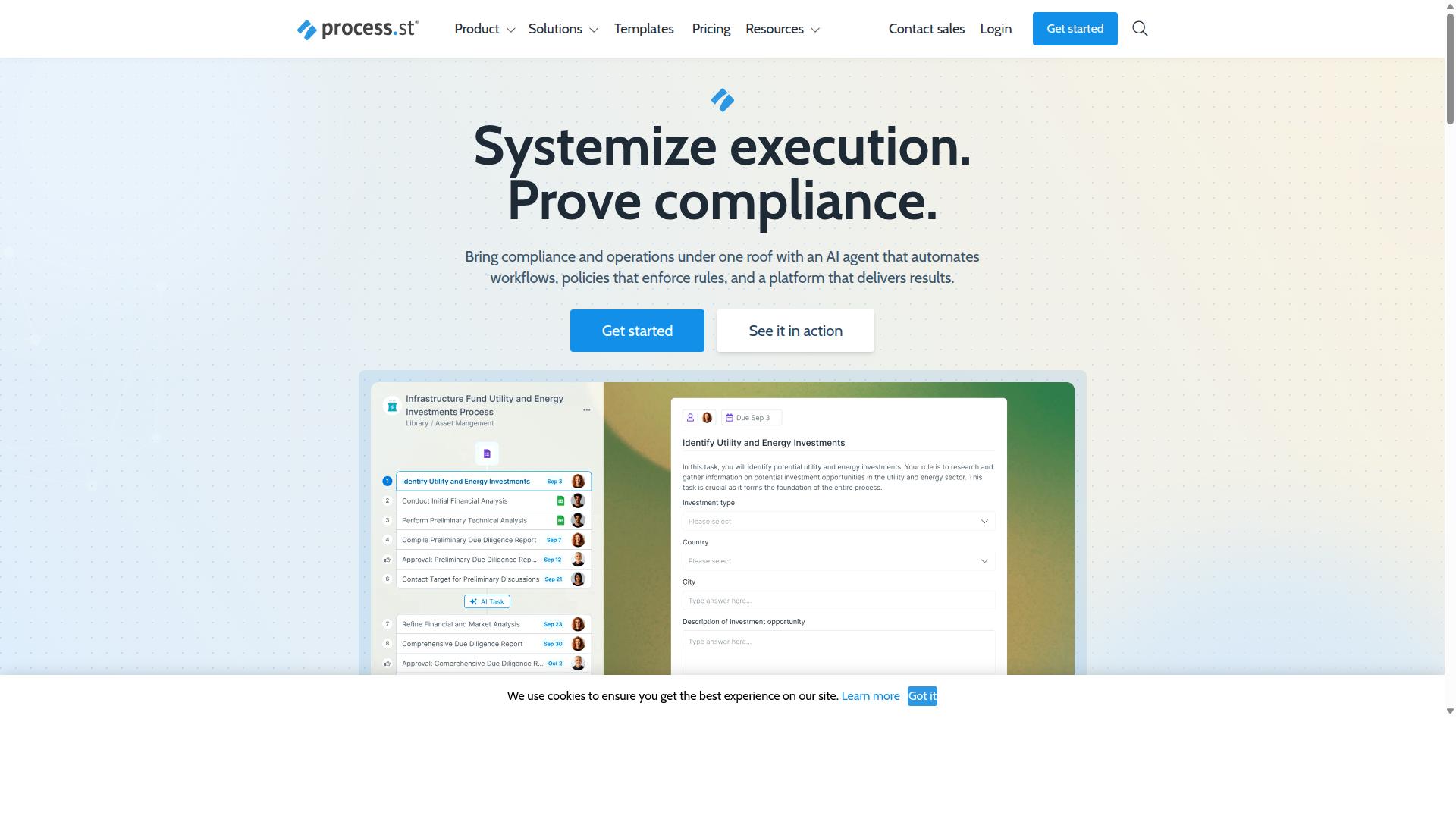
First sentence: Process Street combines document control, AI-driven workflows, and audit-ready reporting in a single no-code platform. Organizations replacing LogicGate Risk Cloud often seek solutions that handle both policy governance and active process execution without requiring custom development.
Docs manages policy versions with full governance support for ISO 9001, SOC 2, SOX, and FDA requirements. The system maintains document repositories that track changes and preserve evidence for regulatory examinations.
Ops converts those policies into AI-powered workflows. Automated task assignment routes work to the right people based on roles and conditional approvals enforce review gates before tasks move forward.
Real-time audit trails capture every action across both documents and processes. Compliance teams can review complete histories without exporting data to separate systems.
Platform features include Process AI, Automations, Analytics, Apps, and Integrations. Supported connectors include Zapier, Microsoft Power Automate, Tray.io, Make, and Public API access for existing business systems.
Cora monitors regulations continuously and flags potential risks. The AI compliance agent works alongside existing workflows rather than replacing established procedures.
2. Flowforma
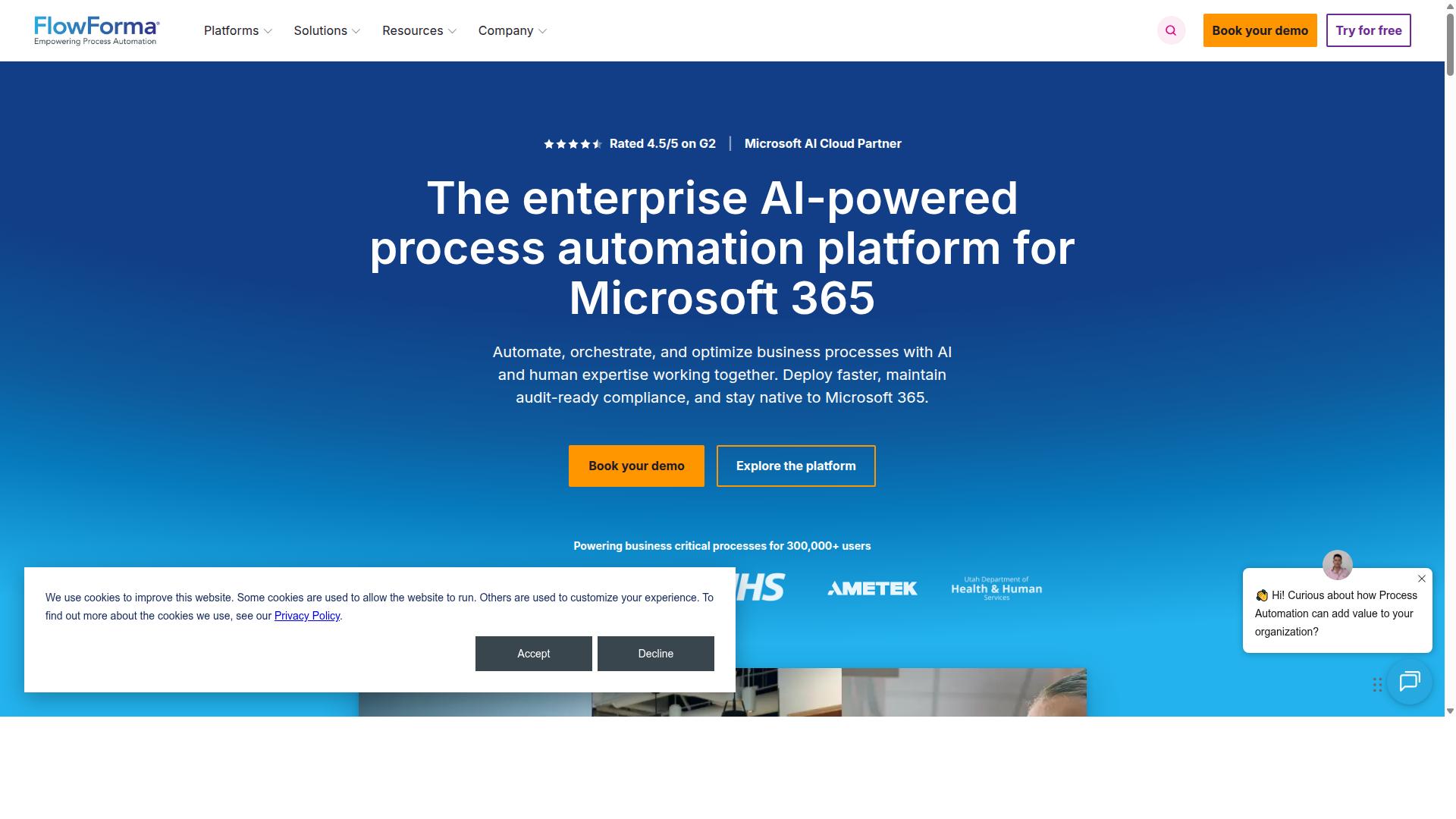
Flowforma is a Microsoft-centric form and workflow tool used by some teams for basic approval routing.
This platform operates as a native Microsoft 365 solution that supports form-based workflows through its integration with SharePoint. Teams often rely on this connection when they need to move documents through simple approval steps without building complex risk structures from scratch.
Users can upload documents or process notes and let the platform generate working forms automatically. The AI Copilot feature provides workflow suggestions while maintaining full audit trails for governance purposes.
Advanced risk matrices, vendor-risk scoring, and multi-framework compliance evidence typically require custom development work. This means organizations handling LogicGate style risk management functions may need to build additional capabilities beyond the standard form routing features.
The platform serves regulated industries including healthcare, financial services, and public sector organizations. It handles workflows across IT, procurement, HR, finance, compliance and operations departments.
Flowforma connects with over 1,000 systems including Teams, SAP, DocuSign and Oracle. Real-time insights help teams identify bottlenecks in their approval processes.
How to Choose the Right Option
First sentence: Match platform capabilities to the risk maturity and compliance scope of your Operations, Compliance, and Finance teams.
Start by listing the compliance frameworks your organization must satisfy. Common requirements include SOX, SOC 2, and ISO 27001, each with distinct control expectations and evidence needs.
Next, estimate the number of monthly active users and any guest auditors who will interact with the system. This figure helps you compare pricing models and feature tiers across alternatives.
Data residency rules can limit which platforms remain viable. Confirm whether records must stay in the US, EU, or UAE before evaluating vendors.
Decide whether your teams prefer AI-assisted workflow creation or manual form design. Some GRC platforms emphasize rapid prototyping, while others favor structured, template-driven builds.
Finally, weigh per-user pricing against the time your teams currently spend preparing for audits. A modest increase in subscription cost can still deliver savings when manual evidence collection shrinks dramatically.
Teams in Operations, Customer management, Compliance, Human resources, Finance, and IT & security often require different access levels and reporting views. Clarify these roles early so the chosen platform supports them without custom development.
Document control and quality tracking remain central for industries such as Financial services, Real estate, Manufacturing, Healthcare, Professional services, Technology, Capital markets, and Property management. Platforms that already serve these sectors reduce onboarding time.
Use cases such as employee onboarding, client onboarding, ISO compliance, and custom workflows provide practical templates you can adapt rather than build from scratch.
Final Verdict
Teams that need policy-to-workflow automation with built-in, audit-ready proof should prioritize Process Street. The platform stands out for organizations comparing alternatives to LogicGate Risk Cloud in the no-code space.
Research suggests that companies adopting streamlined documentation practices see meaningful time savings. Process Street delivers 30% faster documentation speed and 75% reduction in setup time reported by IMCD UK, giving teams more hours back for strategic work.
SOC 2 Type II and ISO 27001 certifications provide the compliance foundation that enterprise risk teams expect. These credentials, along with additional regulatory alignments, address the audit requirements common in GRC platform evaluations.
More than 3,000 companies already use the platform for risk management, policy management, and compliance automation. Adoption at this scale reflects real-world performance across different industry needs and regulatory environments.
When evaluating no-code alternatives to LogicGate Risk Cloud, organizations should consider current platform certifications, documented time savings, and proven enterprise adoption. Contact Process Street through available channels to schedule a demo and assess fit for specific risk and compliance workflows.